Storage projects that begin construction in 2027 must show at least 60% of cost from non-prohibited sources to claim the §48E credit, up from 55% this year. The bar rises five points a year, to 75% in 2030.
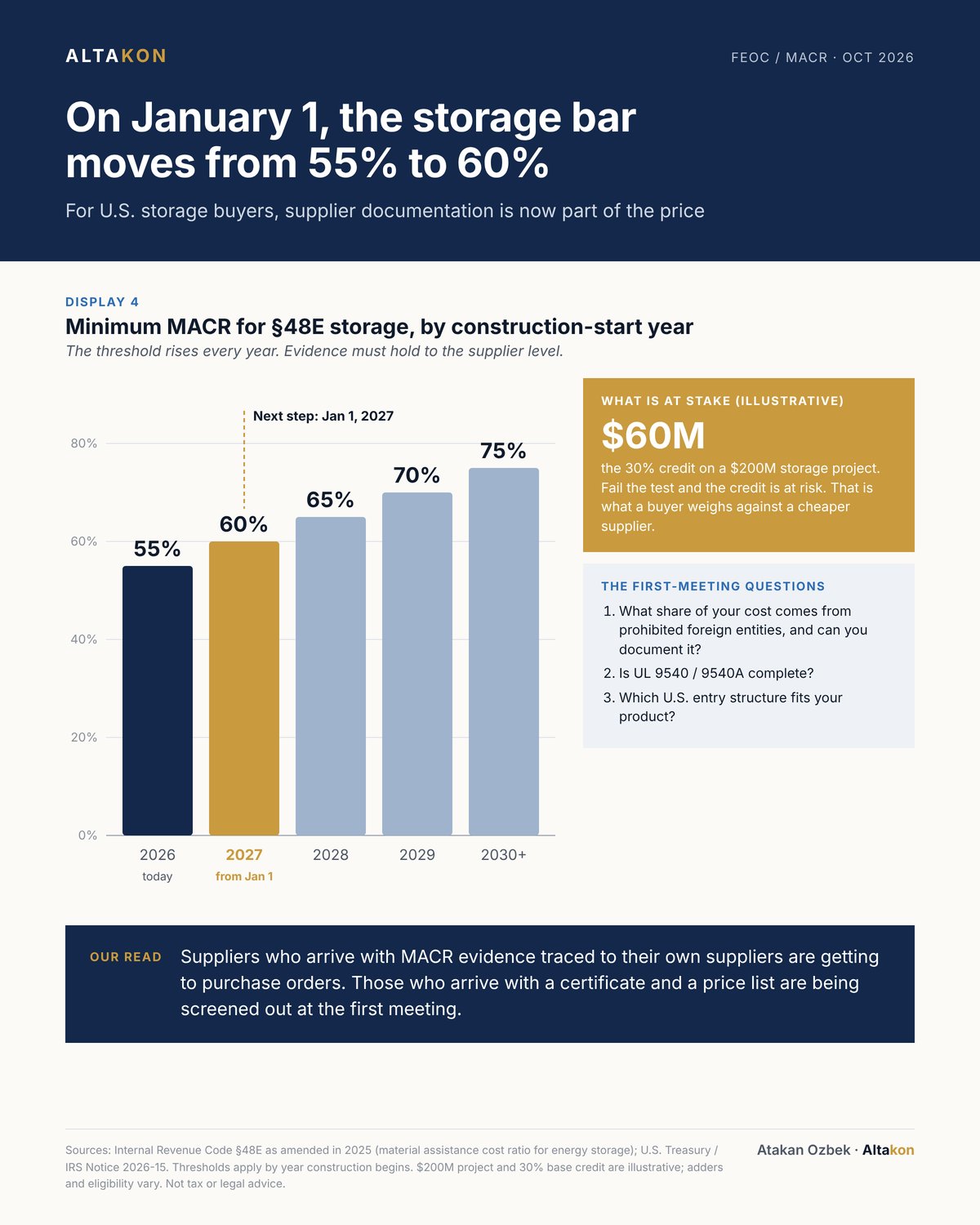
For buyers this is not paperwork. On a $200M project, a 30% credit is $60M, and a supplier whose documentation doesn't hold puts it at risk. So the first meeting now opens with three questions: what share of your cost comes from prohibited foreign entities, and can you document it down to your suppliers? Is your UL 9540/9540A complete? Which U.S. entry structure fits your product?
Suppliers who answer with evidence are getting to purchase orders. Those who answer with a certificate and a price list are screened out.
With the step about nine weeks away, the useful work is short and specific: trace the bill of materials, calculate the ratio against the 2027 bar, and close the evidence gaps buyers will probe.
Altakon's five-day MACR/PFE Diagnostic does that for one product: exposure map, MACR estimate, evidence-gap list and the recommended U.S. entry path. Fixed scope, fixed fee, alongside your counsel.
Sources
- Internal Revenue Code §48E as amended in 2025 (material assistance cost ratio for energy storage).
- U.S. Treasury / IRS Notice 2026-15.
- Thresholds apply by the year construction begins. The $200M project and the 30% credit are illustrative; adders and eligibility vary by project. Not tax or legal advice.